Retention pond vs detention pond: what’s the difference?
A retention pond keeps a permanent pool of water. A detention pond holds stormwater for a while, then lets it drain, so it sits mostly dry between storms. The EPA calls the first a wet pond and the second a dry detention pond. The difference comes down to what happens to the water after the storm passes.
For flood control in Jefferson County, detention is the usual choice. Jefferson County Drainage District No. 6, known as DD6, says retention basins are not common there for flood control. We dig and shape both kinds, and our page on retention and detention ponds covers that work.
What is a retention pond?
A retention pond is a built basin that holds a permanent pool of water. The EPA calls it a wet pond. Its pool lasts all year, or at least through the wet season. Other names include stormwater pond, wet retention pond and wet extended detention pond.
That pool does the cleanup work. The EPA says wet ponds remove pollutants in two main ways. Sediment settles to the bottom, and living things in the pond take up pollutants, nutrients most of all. A shallow shelf of wetland plants around the edge can help hold the soil there and add habitat.
DD6 describes retention from the flood side. It says water often remains in a retention basin indefinitely, except what is lost to evaporation and soil absorption. Its drainage manual adds one detail. A retention facility, often designed with a permanent pool, stores runoff and releases it after peak flows pass.
The EPA says wet ponds have long been a common stormwater control, especially on larger development projects. They need a large, continuous piece of land. A wet pond also needs enough land draining into it to keep its pool. Where only a small drainage area is available, the EPA points design engineers to other practices.
What is a detention pond?
A detention pond is built to empty. DD6 describes a detention basin as an area dug out to store excess floodwater for a while. It drains over time as water levels go down, typically after the peak of the storm flow passes. Sometimes that happens while it is still raining.
The EPA calls these dry detention ponds, or dry ponds. Other names include extended detention basins. They hold water for a minimum time, 24 hours in the EPA’s example, so particles settle and peak flows drop. They do not have large permanent pools, though they often have small pools at the inlet and outlet.
DD6’s manual explains how one empties. A detention facility stores the added runoff while letting water out steadily through an outlet that limits the flow. That keeps peak flows downstream in check. Peak flow is the biggest rush of water during a storm.
Dry ponds need room, too. The EPA says they require a large area to build. They generally suit sites with a minimum area of 10 acres. On smaller sites, the outlet opening needed for small storms gets very small and tends to clog.
Dry ponds have been among the most widely used stormwater controls, the EPA says. Their ability to clean water is limited, though. Where pollutant removal matters most, they may not be the best choice. The EPA also warns that standing water lasting more than 3 days makes them breeding grounds for mosquitoes.
Some ponds do both jobs. The EPA describes a wet extended detention pond that splits water between a permanent pool and detention storage above it. During storms, it holds the water above the pool and releases it over 12 to 48 hours.
| Retention pond | Detention pond | |
|---|---|---|
| Water between storms | A permanent pool | Little or none |
| Main job | Hold a pool and settle out sediment | Hold stormwater, then let it out slowly |
| What lowers the water | Mostly evaporation and soaking in | An outlet, after the peak passes |
| In Jefferson County | Not common for flood control | 38 run by DD6 |
Which one does Southeast Texas use, and why?
The clearest local answer comes from Jefferson County, and it is detention. DD6 runs 38 detention basins across Jefferson County. It says retention basins, for flood damage reduction, are not common in the Jefferson County region.
Flat ground is a big part of the reason. DD6 says Jefferson County is pancake flat. Because of that, most of its detention storage must be excavated. The basins get dug down into the ground to make room for the water.
Rain is the other part. NOAA’s 1991 to 2020 normal for Port Arthur is 62.13 inches of rain a year. On flat ground, that water needs a place to wait until the ditches and channels go down.
The soil plays a part, too. The Beaumont clay, described from a site west of Beaumont in Jefferson County, runs 42 to 60 percent clay. It is poorly drained, and water moves through it very slowly. The Evadale soil, described from a site in Jasper County, is rated the same way.
The USDA pond handbook calls clays and silty clays excellent for holding water. It calls coarse sands and sand gravel mixes usually unsuitable, because water passes through them easily. So in the right ground here, a retention pond can keep its pool. Which kind a site gets is a call for the engineer and the local rules.
Does my property need a detention pond?
In DD6’s district, it depends on how much hard surface you add. The DD6 Drainage Criteria Manual, July 2025 Update, sets a policy of a net-zero increase in runoff. It covers new development, redevelopment or site changes that add more than 0.25 acres of impervious surface.
Impervious surface is hard cover, like roofs and paved parking lots, that rain cannot soak into. The 0.25 acre line works out to 10,890 square feet of it. Net zero means no increase in runoff between the site as it is now and the site as planned. The policy is there to offset the effect of that new hard cover.
DD6 also reviews proposed developments in its service area. If the review finds a project would harm the areas around it, the plans must include detention. Splitting a tract, or replatting it, to shrink the detention requirement is not permitted. The manual uses the original tract size to set the requirement.
DD6 says on-site basins become the developer’s job to build and maintain. The final landowner may maintain them instead. When a plan calls for a basin, our retention pond construction page shows how we dig one.
DD6’s manual covers its own district. In Jasper, Orange, Hardin and Newton counties, check with your county or drainage district before you plan a basin. Ask early, while the plans can still change. The EPA’s guidance is plain on this point: design engineers should follow local requirements.
DD6’s manual says its rules stand apart from any state requirements. The Texas Commission on Environmental Quality, or TCEQ, runs a construction stormwater general permit, TXR150000. It covers work that disturbs 1 acre or more. Work under 1 acre that is not part of a larger common plan of development falls outside it.
How is a retention or detention pond built?
It starts with a plan. Your engineer sets the size, depth, outlet and release rate, or the drainage district review does when rules require it. In DD6’s district, the manual calls for a detailed soils investigation by a geotechnical engineer, unless the district approves otherwise. We dig to that plan and leave the design and engineering with the engineer.
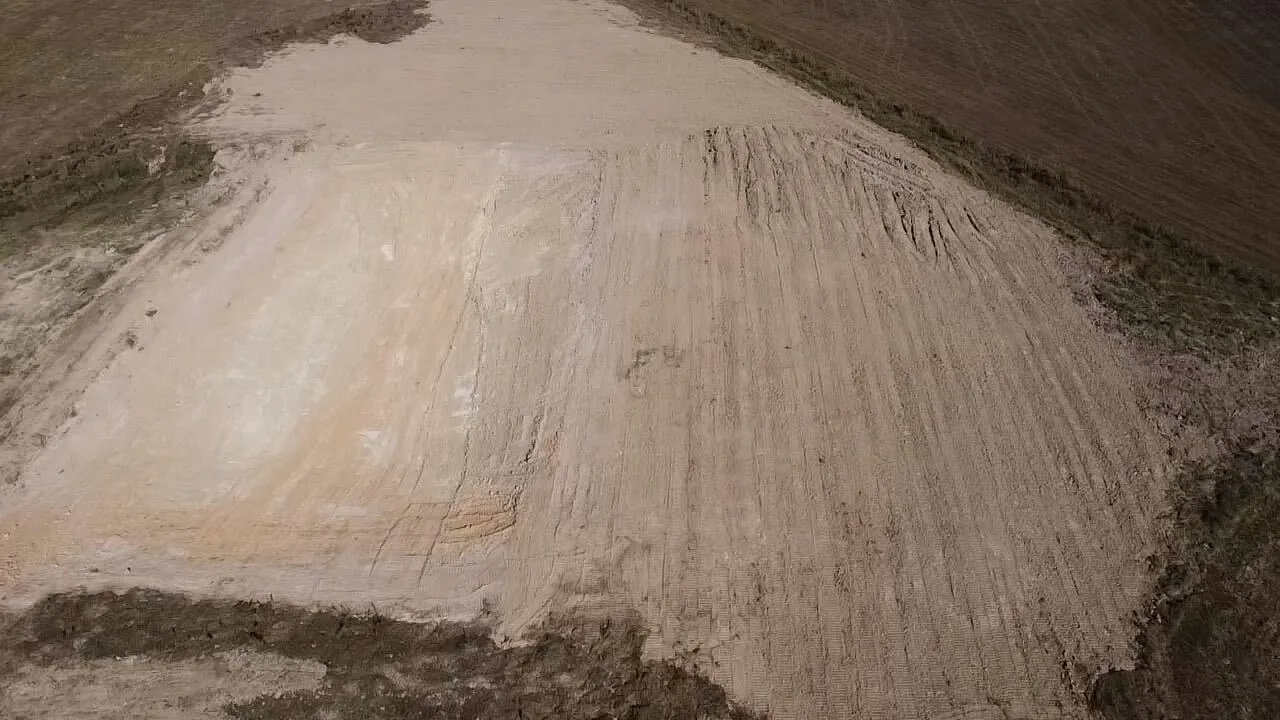
Then the dirt work starts. The site gets cleared, and the basin is dug and shaped to the plan. The banks and the berm are shaped and packed with the tracks.
The dirt that comes out gets spread or shaped on site, often into a building pad. The ground around the basin gets graded so water reaches it. Water gets to a basin and away from it through drainage ditches and culverts.
Height brings in the state. The DD6 manual says basins whose dam or embankment stands taller than six feet are subject to state rules. For those basins, DD6 may hold back its approval until a state application is filed or approved.
The USDA pond handbook says the pond’s owner is responsible for obtaining permits. Our pond guide covers the dam and permit rules for Texas ponds in more detail.
A pond for cattle or fishing is a different job. Our page on farm and stock ponds covers that work.
We are based in Buna and dig retention and detention ponds across Southeast Texas. Close to home, that includes Beaumont, Lumberton, Orange and Silsbee. The best time to look at a water problem is right after a rain. Give us a call to set up a free on-site estimate.